Yosemite National Park Hiking Page
Welcome to the Yosemite National Park Hiking Page
Here you will find information on hiking trails for day hikes and backcountry exploration, biking paths, and wilderness areas of interest for hikers.
-SPONSORED LINKS-
Yosemite Lodging
Yosemite Hotels
Yosemite Maps
Yosemite Camping
Yosemite Weather
Yosemite Tours
Yosemite Pictures
Yosemite Vacation
Cub and Sow

Sponsored National Park Search

Cub and Sow by John W. Uhler

Yosemite National Park Hiking Guide

  • Badger Pass
  • Bears and Cougars
  • Biking
  • Climbing
  • Favorite Valley Walks
  • Fishing
  • Glacier Point Area
  • Hetch Hetchy Area
  • Hiking Info
  • Roads
  • Sequoia Groves Area
  • Tuolumne Meadows Area
  • Valley Area
  • Wawona Area
  • Wilderness

  • 
    

    Hiking

    Hiking in the Yosemite National Park can be a fun and rewarding experience as in other national parks. It is a great way to both see and experience the park.

    A few things to remember while hiking:

    • Stay on trails: taking shortcuts is dangerous and causes trail erosion.
    • Carry (and drink) plenty of water: a leading cause of injuries on the trail is dehydration. Be sure to treat river, stream, lake, or spring water.
    • Smoking while traveling on trails is prohibited, though you may smoke will stopped. (Crush out and dispose of cigarette butts in a trash receptacle.)
    • Horses and mules have the right of way on trails.
    • Pack out what you pack in.
    • Trails are not maintained nor are they regularly patrolled: travel carefully and at your own risk. There are 840 miles of trails and eight-miles of paved bike path in the Yosemite Valley.
    • Dogs and other pets, bicycles, strollers, and motor vehicles are only permitted on paved trails.
    • Do not hike or snowshoe in Nordic ski tracks. People on snowshoes, should walk alongside, but not in the ski trails.
    Tick Borne Diseases

    Be aware that ticks may exist in the park. Consult your doctor if you believe you've been bitten.

    High Winds

    High winds, called Mono Winds, sometimes occur in Yosemite and are created by an atmospheric condition which exists along the Sierra Crest. These winds can speed westward down canyons at 50 to 70 miles per hour.

    While quite rare, this phenomenon occurs more often in Yosemite Valley than any other occupied part of the park, and most frequently during Oct through Mar. Mono Winds can create potential danger from falling trees and may dictate that the National Park Service initiate area closures or evacuations to insure the safety of park visitors and residents. If a closure or evacuations should occur, please follow instructions carefully and stay out of evacuation areas until officially notified that it is safe to return.

    Pioneer Yosemite History Center

    See horse drawn wagons, walk across a covered bridge, and visit historic buildings out of Yosemite's past. Take a 30 minute, self-guided tour through the Pioneer Yosemite History Center and learn about people and events of Yosemite. The Center is always open, and explanatory signs and brochures are available. Located adjacent to the Wawona General Store, across the Covered Bridge. Easy walking, except during extreme snow conditions.

    Miwok

    The Miwok in Yosemite is a short loop trail that winds through a reconstructed Miwok-Paiute Village in the Indian Village of Ahwahnee. It introduces Southern Miwok life, history, and language. The trail begins behind the Yosemite Museum building.

    Changing Yosemite

    A Changing Yosemite is a one mile trail that explores the changes which have led to the Yosemite we experience today. Trail begins near shuttle bus stop #6.

    Happy Isles

    At Shuttle Bus Stop #16, Happy Isles and the Nature Center provides family-centered exhibits, and wonderful wheelchair and stroller accessible paths that wind around the rushing Merced River. This is an ideal place for a family outing. The Valley Junior Ranger program operates from the Nature Center during summer months and there are many educational (and interesting!) exhibits in the new Nature Center.


    Tuolumne Meadows and Grove Area

    The Tuolumne Grove of Big Trees is near Crane Flat at the intersection of the Big Oak Flat Road (Highway 120 West) and the Tioga Road. The former route of the Big Oak Flat Road leads downhill from Crane Flat into the Tuolumne Grove of Big Trees, a cluster of about 25 giant sequoias. Now closed to cars, this 2 mile round-trip walk or ski is relatively easy, though it is all uphill on the way back from the grove.

    Tuolumne Meadows is a large, open sub-alpine meadow graced by the winding Tuolumne River and surrounded by majestic peaks and domes. Picnic areas and miles of hiking trails are available. A hikers' bus and free local shuttle bus service operate during the summer. During the winter, this area is only accessible by cross-country skis or snowshoes. Be prepared for changing weather.

    Trail Distance
    Time
    Description
    Cathedral Lakes 7.0 mi
    4.0 to 6.0 hrs
    Start: Cathedral Lakes Trailhead, on the Tioga Road (it is recommended that you take the shuttle bus due to limited parking at the trailhead).The trail climbs steadily (1,000 ft / 305 m) to Upper Cathedral Lake. Near the top, it passes a spur trail to Lower Cathedral Lake.
    Dog Lake 2.8 mi
    3.0 hrs
    Start: Dog Lake/John Muir Trail parking area on the road to Tuolumne Meadows Lodge.The trail goes up steeply and crosses the Tioga Road, then continues up for 0.75 mi (1.2 km) to a signed junction. Continue straight to Dog Lake. Enjoy fishing and picknicking from this high country lake.
    Elizabeth Lake 4.8 mi
    4.0 to 5.0 hrs
    Start: Above the Tuolumne Meadows Group Campground.From the campground, the trail climbs steadily to the glacier-carved lake at the base of Unicorn Peak.
    Gaylor Lakes 2.0 mi
    2.0 hrs
    Start: Gaylor Lakes Trailhead, at the Tioga Pass Entrance Station. The trail climbs steeply in the first 0.5 mi / 0.8 km (1,000 ft / 304 m elevation gain) to a ridge with views to both sides. Ath the ridge, the trail drops 200 ft / 61 m to a lake and meadows, which can be explored with side trails (not included in the 2 mi / 3.2 km roundtrip length).
    Glen Aulin 11.0 mi
    6.0 to 8.0 hrs
    Start: Park along the road to the Tuolumne Meadows Stables and follow the gravel road as it loops behind Soda Springs. The trail begins at Soda Springs and drop to Glen Aulin. The route is noted fro scenic cascades, particularly Tuolumne Falls, located 4 miles from the trailhead.
    John Muir Trail through Lyell Canyon 8.0 mi(one way)
    4.0 hrs
    Start: Dog Lake/John Muir Trail parking area on the road to Tuolumne Meadows Lodge. The relatively flat trail (only 200 ft / 61 m elevation gain over 8 mi / 12.9 km) wanders through Lyell Canyon, mostly alongside the Lyell Fork of the Tuolumne River. Begin across the road from Dog Lake parking area, where the trail heads upstream alongside the Dana Fork of the Tuolumne River, crosses it, and subsequently arrives at the Lyell Fork.
    Lembert Dome 2.8 mi
    3.0 hrs
    Start: Dog Lake/John Muir Trail parking area on the road to Tuolumne Meadows Lodge.The trail goes up steeply for 0.75 mi (1.2 km) to a signed junction. The trail to the left goes to the top of Lembert Dome. Expect a spectacular panoramic view of Tuolumne Meadows, Cathedral Peak, and Unicorn Peak.
    Mono Pass 8.0 mi
    4.0 to 6.0 hrs
    Start: Mono Pass Trailhead, 6 mi / 4.4 km east of Tuolumne Meadows on the Tioga Road.The trail climbs gently at first (1,000 ft / 304 m elevation gain) to a junction with Spillway Lake. The left fork then steeply climbs to Mono Pass, at 10,500 ft / 3,200 m. From the pass, Upper Sardine Lake is another 0.75 / 1.2 km down the pass to the east.
    Soda Springs & Parson's Lodge 1.5 mi
    1.0 hr
    Start: Lembert Dome parking area on the Tioga Road. Follow the gravel road northwest past a locked gate. The Soda Springs are protected within a log enclosure. Carbonated water bubbles up through the ground, but drinking the water is not recommended tue to possible surface contamination. Continue along the trail to historic Parson's Memorial Lodge, which offers exhibits. A path winds to the bridge below and continues to the visitor center.
    Vogelsang High Sierra Camp, Lake, and Pass 15.8 mi
    6.0 to 8.0 hrs
    Start: Dog Lake/John Muir Trail parking area on the road to Tuolumne Meadows Lodge. The first 2 mi / 3.2 km, along the John Muir Trail, are relatively level. The Rafferty Creek Trail then splits off and begins a 1,200 ft / 366 m ascent to Tuolumne Pass, followed by a 160 ft / 49 m climb to the High Sierra Camp. You can continue to Vogelsang Lake (0.5 mi / 0.8 km further) and spectacular Vogelsang Pass (1.5 mi / 2.4 km further).


    Glacier Point Area Day Hikes

    An overlook with a commanding view of Yosemite Valley, Half Dome and the High Sierra is located 30 miles (one hour) from Yosemite Valley. From Yosemite Valley, take Highway 41 for fourteen miles to the Chinquapin junction, then turn left onto Glacier Point Road. The road ends at Glacier Point. In winter, the road is plowed as far as the Badger Pass Ski area and Glacier Point can be reached via skis or snowshoes only.

    All distances are round trip unless otherwise noted
    Trail Distance
    Time
    Description
    McGurk Meadow, Bridalveil Creek, & Dewey Point 7.0 mi
    3.0 to 5.0 hrs
    Start: McGurk Meadow trailhead parking area, just west of the Bridalveil Creek Campground turnoff along the Glacier Point Road. The trail leads downhill to an old cabin built by John McGurk and a large meadow. Continue east (right) at the trail junction to get to Bridalveil Creek (4 mi / 6.4 km) or continue west to a Dewey Point (7 mi / 11.2 km), which has a spectacular view of western Yosemite Valley.
    Mono Meadow 3.0 mi
    2.0 to 3.0 hrs
    Start: Mono Meadow trailhead parking area, 2.5 mi (4 km) east of Bridalveil Creek Campground, along the Glacier Point Road. The trail descends steeply to Mono Medow, an area which is wet, particularly early to mid summer (be sure to stay on the trail, even if it is muddy). Shortly after you leave Mono Meadow, you will arrive at an unmarked clearing with views of the Clark Range, Mount Starr King, and Half Dome.
    Ostrander Lake 12.7 mi
    8.0 to 10.0 hrs
    Start: Ostrander Lake trailhead parking area, 1.3 mi (2.1 km) east of Bridalveil Creek Campground, along the Glacier Point Road. The first half of this hike gains little elevation; the second half gains about 1,500 ft (450 m). As you climb, you gain views of the Clark Range and, eventually, you arrive at Ostrander Lake.
    Sentinel Dome 2.2 mi
    2.0 hrs
    Start: Sentinel Dome/Taft Point trailhead parking area, 6 mi (9.6 km) east of Bridalveil Creek Campground, along the Glacier Point Road. This relatively easy hike takes you to the base of Sentinel Dome, where you can scramble up the granite slope of the dome (it is not especially steep on its northeast side). From the top, you have a spectacular 360° view of Yosemite Valley (including Yosemite, Vernal, and Nevada Falls) and parts of the high country.
    Taft Point 2.2 mi
    2.0 hrs
    Start: Sentinel Dome/Taft Point trailhead parking area, 6 mi (9.6 km) east of Bridalveil Creek Campground, along the Glacier Point Road. This relatively easy hike takes you to the edge of Yosemite Valley. As you approach Taft Point, keep your eye out for fissures--deep cracks that extend hundreds of feet downards. At railed-in Taft Point, you have a breathtaking view of Yosemite Valley, 2,000 feet ( 600 m) below.


    Sequoia Groves Area - Mariposa Grove

    The Mariposa Grove of Giant Sequoias, located at the southernmost end of Yosemite, is the largest stand of giant sequoias in the park. Allow 1.25 hours driving time from Yosemite Valley. Cars are prohibited beyond the parking area, however many giant sequoias can be seen from there. The access road to the Grove may close for extended periods due to heavy snowfall. Call 209- 372-0200 for current road and weather information. If the access road is closed, add an extra half-hour walking time from the South Entrance of the park to the Grove.

    All trails in the Mariposa Grove of Giant Sequoias are uphill. The trailhead is located at the far end of the parking area. Interpretive signs between the trailhead and the Grizzly Giant provide a self-guiding tour. Written translations of these signs are available at the trailhead (German, French, Spanish, Japanese).

    Distance is in miles and Elevation is in feet

    Sequoia Groves Area Trails
    Destination Distance from Trailhead Elevation Gain in Feet
    Fallen Tunnel Tree 2.5 1,000
    Grizzly Giant 0.8 400
    Grove Museum 2.1 800
    Wawona Point 3.0 1,200


    Valley Area - Day Hikes

    All distances are round trip unless otherwise noted
    Trail Distance
    Time
    Description
    Bridalveil Fall 0.5 mi
    0.25 hr
    Start at Bridalveil Fall Parking Area, easy; wheelchair accessible with assistance.This short walk to the bottom of Bridalveil Fall provides a great view of the fall.
    Glacier Point 4 Mile 9.6
    6.0 to 8.0 hrs
    Four Mile Trailhead just west of Swinging Bridge picnic area. This trail takes you up switchbacks to the Glacier Point, along the rim of Yosemite Valley. The trail offers spectacular views up and down Yosemite Valley (not to mention what you get to see when you get to Glacier Point). If you are interested in a long day hike, return to Yosemite Valley via the Panorama Trail. The Four Mile Trail is closed from approximately December through sometime in May due to hazardous conditions.
    Half Dome 17.0 mi
    10.0 to 12.0 hr
    Begin at Happy Isle/Shuttle Stop # 16. Very strenuous 4,800 ft elev gain; cables route closed mid-Oct to late May. Yosemite's most distinctive feature, Half Dome, dominates the valley view. Half Dome rises 4,733 feet from the valley floor and at 87 million years old, it is the youngest plutonic rock in the valley. A hike to the top of Half Dome provides the physically fit with a strenuous walk, intimidating climb and rewarding view. This trek is not to be undertaken without care and preparation.
    Lower Yosemite Fall 0.5 mi
    20 min
    Begin at Yosemite Falls Shuttle Stop #7. Easy, wheelchair accessible with assistance. This short walk up a paved trail to the bottom of Lower Yosemite Fall provides great views of all of Yosemite Falls, plus a close-up view of the lower fall. (Note: this waterfall is often dry from August through October.)
    Mirror Lake / Meadow 2.0 mi / 1.0 hr
    5.0 mi / 2.0 hr
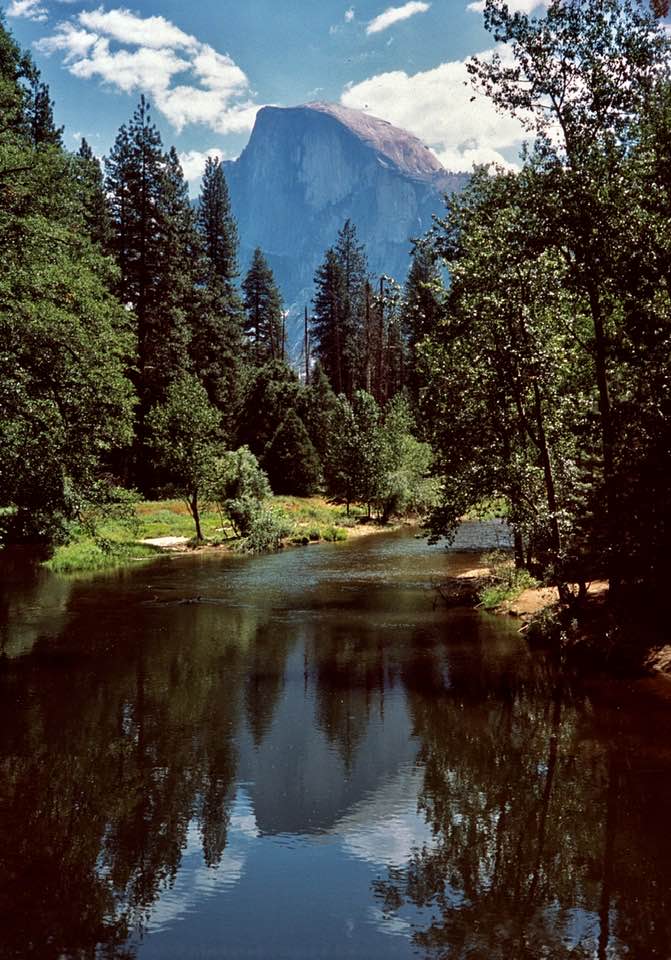
    Begin at Mirror Lake Shuttle Stop # 17. Easy, vehicle access available with placard.The walk to Mirror Lake/Meadow is a leisurely walk either along an old, paved road or along a slightly longer dirt trail. The "lake" is really a large pond in spring and a meadow the rest of the year. Despite this, you're still right at the bottom of Half Dome, and you have a great view of it from Mirror Lake/Meadow. You can also hike all the way around the lake.
    Nevada Fall (Mist Trail) 7.0 mi
    5.0 to 6.0 hr
    Begin at Happy Isle/Shuttle Stop # 16. Strenuous 1,900 elev gain; check conditions at Visitor Center in winter. If you continue past the top of Vernal Fall, you'll get to see Nevada Fall from near its base and, if you continue up even more granite steps, you reach the top of Nevada Fall.
    Panorama Trail 8.5 mi(one way)
    6.0 hr
    start at Glacier Point. The Panorama Trail is full of panoramic views and includes close-up views of three waterfalls (including lesser known Illilouette Fall). The trail continues down the Mist Trail and ends at Happy Isles. From late May or early June through October, a fee-based hikers bus will take you up to Glacier Point. Alternatively, if you are interseted in a long day hike, take the Four Mile Trail to Glacier Point.
    Top of Yosemite Fall 7.2 mi
    6.0 to 8.0 hr
    Sunnyside Campground Shuttle Stop #8. Very strenuous 2,700 elev gain, check conditions at Visitor Center in winter.
    Upper Yosemite Fall 7.2 mi
    6.0 to 8.0 hr
    Sunnyside Campground Shuttle Stop #8.This switchbacking trail takes you to the top of 2,425 foot (739 meter) high Yosemite Falls. The trail provides great views of Half Dome and eastern Yosemite Valley. If you do not have the time (or energy) to make it to the top, you can hike about one mile to railed-in Columbia Rock, which itself has great views. If you continue about a half-mile beyond Columbia Rock, along a relatively easy section of the trail, you can get spectacular views of Upper Yosemite Fall.
    Valley Floor Loop 13.0 mi full loop /5.0 to 7.0 hr
    6.5 mi half loop /2.5 to 3.5 hr
    Begin at Yosemite Falls Shuttle Stop #7. Walking along the valley floor is a great way to see Yosemite Valley in slow motion (compared to driving around it). While this trail remains close to the road for parts of the hike, you will not see very many hikers on the trail. To take the short version of this hike, be sure to cross the bridge just east of El Capitan Meadow (the large meadow at the base of El Capitan). This trail is very difficult to follow if there is snow on the ground (approximately December through March).
    Vernal Fall 1.6 mi to bridge
    1.5 hr
    3.0 mi to top
    3.0 hr
    Begin at Happy Isle Shuttle Stop #16. This hike is nearly all uphill, but once you get to the Vernal Fall footbridge, you get a view of 317 foot (97 m) high Vernal Fall. The further you go on this trail the better the views become. If you continue past the footbridge, you can go all the way to the top of this waterfall. The trail becomes so steep that it takes a staircase of 600 granite steps to get to the top. In spring and early summer, expect to get wet. This trail is closed from the junction with the John Muir Trail (just beyond the Vernal Fall footbridge) from November through April due to falling ice and rock. An alternate route (via the John Muir Trail) is available.

    Repair of Half Dome

    The last half mile of the popular trail to the summit of Half Dome (from the "shoulder" up to the cables to the top) will be repaired in the summer of 2002.

    Crews cannot work on the trail while it is open because of safety concerns for both the visitors and the employees. Therefore, from July 8 through September 19, 2002, while the trail crew does the necessary work, hikers will be prohibited through this section of trail during the crews' work hours (7:00 am-4:00 pm, Mon-Thu).

    The trail will remain open from Thu at 4:00 pm through Mon at 7:00 am as well as after 4:00 pm until 7:00 am Mon through Wed.

    The trail repair will protect both the visitors and the resources in the park. The stone steps in this section of trail have deteriorated significantly, are at risk of failure, and need to be rebuilt. Additionally, many hikers cut around the trail because of its condition and trample nearby vegetation. By making the trail the best option for hikers, impacts can be restricted to the trail corridor. Repairs on this section of the trail have not been completed since 1973.

    Hikers and climbers need to plan their trips to work around trail crew work hours on the Half Dome Trail. Additionally, users must take the usual precautions, as always, to be safe. Carry extra water, a flashlight, and let someone at home or in camp know where you are going and if you might be late. Hikers should be aware that afternoon lightning storms are possible which make Half Dome extremely dangerous. The summit of Half Dome is always closed to overnight camping to protect the area's natural resources.

    The project is being completed through donations from the Yosemite Fund, a non profit group that partners with Yosemite National Park to achieve the park's mission to protect the natural and cultural resources of the park while providing a quality visitor experience.

    There are two self-guiding trails in the Yosemite Village area: one through the Indian Village of Ahwahnee and another through a nearby meadow. Information booklets are available for each trail at the trailhead. Large-print materials are available in the Visitor Center for people with visual impairments.


    Wawona & Mariposa Grove Day Hiking

    All distances are round trip unless otherwise noted
    Trail Distance
    Time
    Description
    Alder Creek 12.0 mi
    6.0 hrs
    Start: Alder Creek trailhead parking area, 0.4 mi (.6 km) up Chilnualna Falls Road.The trail climbs northward through an open pine forest with abundant manzanita on the drier slopes.
    Chlnualna Fall 8.2 mi
    5.0 to 6.0 hrs
    Start: Chilnualna Fall trailhead parking area, 2 mi (3.2 km) up the Chilnualna Falls Road. This pleasant hike takes you near past cascades of Chilnualna Fall and all the way to the top of the fall.
    Mariposa Grove of Giant Sequoias 1.6 mi /1.0 hr
    (to Grizzly Giant)
    6.0 mi / 3.0 to 4.0 hrs
    Start: Mariposa Grove parking area. (From May through September, it is highly recommended that you take the free shuttle bus.) Various trails exist throughout the grove. To reach the Grizzly Giant and California Tunnel Tree, follow the trail that begins at the far end of the parking area. To reach Wawona Point, continue on the trail past the Grizzly Giant into the upper grove. The old road ascends to Wawona Point from near the Galen Clark Tree.
    Swinging Bridge Loop 5.0 mi
    2.0 hrs
    Start: Pioneer Yosemite History Center or Wawona Store. The paved road, Forest Drive, leads 2 mi (3.2 km) upstream from the history center to the end of the paved road. Continue on the dirt road for a short distance until you get to the swinging bridge (which really does swing). Cross the bridge and bear left onto the dirt road, which soon becomes paved Chilnualna Falls Road. When you reach the Wawona Stable, walk into it towards the Covered Bridge, where you started this hike.
    Wawona to Mariposa Grove 6.0 mi
    3.0 hr (one way)
    Start: About 50 yards uphill of the Moore Cottage at the Wawona Hotel (look for the "Two Hour Ride Trail" sign). This generally viewless hike gets you to the Mariposa Grove of Giant Sequoias. From late April through September, you can take the free shuttle bus from the grove back to Wawona.
    Wawona Meadow Loop 3.5 mi
    1.0 to 2.0 hrs
    Start: Golf course across the street from the Wawona Hotel. Walk up the paved road through the golf course and take the first left. This is a pleasant, shady stroll on a fire road around the Wawona Meadow.


    Hetch Hetchy

    Hetch Hetchy Reservoir, a source of drinking water for San Francisco, is also home to spectacular scenery and is the starting point for many less-used back-country trails. Towering cliffs and high waterfalls are easily seen from the walkway on top of O'Shaughnessy Dam. Hetch Hetchy Reservoir is located 40 miles from Yosemite Valley via Highway 120 and Evergreen and Hetch Hetchy Roads. Although the road to Hetch Hetchy is open year-round, it may close periodically due to snow in winter and spring. Vehicles over 25 feet are prohibited on the road to Hetch Hetchy due to its narrowness.

    Hetch Hetchy Day Hiking Area

    All distances are round trip unless otherwise noted
    Trail Distance
    Time
    Description
    Poopenaut Valley 3.0 mi
    2.0 hrs
    Start: Four miles from the Hetch Hetchy Entrance Station (look for the small turnout on the right), along the Hetch Hetchy Road. This trail provides quick access to the Tuolumne River, descending 1,229 feet (735 m) to the river below O'Shaugnessy Dam.
    Rancheria Falls 13.4 mi
    8.0 to 10.0 hr
    Start: O'Shaugnessy Dam.This is a popular trail for overnighters but it makes for a good day hike as well. You will see Hetch Hetchy Valley from various perspectives.
    Smith Peak 12.5 mi
    6.0 hr
    Start: Hetch Hetchy Ranger Station. This trail takes you through forest and meadow to Smith Peak, where you get great views of the Hetch Hetchy area.
    Wapama Falls 5.0 mi
    2.0 to 4.0 hr
    Start: O'Shaugnessy Dam. This easy trail will take you right to the bottom of Wapama Falls (and Tueeulala Falls in spring). Watch for rattlesnakes and poison oak!


    Some Favorite Valley Walks

    Yosemite Valley Walks- all distances are round trip unless otherwise noted
    Trail Distance Time Notes
    Loop Trail 0.5 mi 0.75 hr Easy. Take shuttle to base of Yosemite Falls, cross bridge and follow loop trail through woods back to shuttle.
    Ahwahnee Hotel to Mirror Lake 3.0 mi 0.75 hr Moderate.
    Ahwahnee Hotel to Yosemite Falls 3.0 mi 0.75 hr Moderate.
    Yosemite Lodge to Bridalveil Falls 7.0 mi 0.75 hr Easy, flat.


    Badger Pass

    Allow one hour driving time from Yosemite Valley to the Badger Pass Ski Area. All activities meet in front of the Badger Pass A-Frame, and are dependent on snow conditions. Activities will be canceled when the Badger Pass Road is closed. Call 209-372-0200 for current road and weather information.

    Ride the Free Badger Pass Bus

    Ride the free bus to Badger Pass Ski Area (bus begins running when Badger Pass Ski Area opens for the season). Road and weather conditions permitting, the bus leaves daily from:

    Curry Village at 8:00 am and 10:30 am
    The Ahwahnee at 8:15 am and 10:45 am
    Yosemite Lodge at 8:30 am and 11:00 am

    Return bus leaves Badger Pass at 2:00 pm and 4:30 pm. Several buses operate on busy days. Allow at least 45 minutes for a one-way trip. Additional information is available at hotel front desks.

    Ranger Snowshoe Walks

    Join a ranger for a snowshoe walk everyday at 10:30 am to "Explore the Forest in Winter." Wear warm clothes and boots for this 2 hour, moderately strenuous walk. While snowshoes are provided, they are not recommended for children under 10 years of age. A $2.00 per pair maintenance fee is charged. NOTE: Ranger walks start when the Badger Pass Ski Area opens for the season.

    Snow Play Safety

    Sledding is not allowed in the Badger Pass area, but can be enjoyed at Goat Meadow (one half mile south of the South Entrance on Highway 41). Each year sleds, toboggans, innertubes, saucers, and other sliding devices cause more injury than any other winter activity. To reduce your chances of being injured, consider the following guidelines:

    Choose a snow play area that has a long, gentle runout.

    Slow down! The faster the speed, the less control.

    Attempting to stop or slow down by sticking a foot in the snow can cause broken legs or dislocations.

    Slide one-at-a-time. Several people on one sliding device have a greater chance of being injured.

    Small children riding in front or in the laps of others can suffer injuries during stops or spills.


    Wilderness Area
    

    Wilderness permits are required for all overnight trips into the wilderness in Yosemite National Park.

    The Wilderness Center in Yosemite Valley is open daily from 8:00 am to 5:00 pm for wilderness information and to obtain wilderness permits.

    Same day permits are available by self-registration in Tuolumne Meadows, Wawona, and the Big Oak Flat area. Permits are available up to 24 weeks in advance by writing:

    Wilderness Permits
    P.O. Box 545
    Yosemite CA 95389
    or
    by calling: 209-372-0740.

    There is a $3.00 per person non-refundable processing fee charged for all reservation requests received by mail or phone.

    Winter in the Wilderness

    Yosemite's wilderness is a popular destination for winter skiing and snow-shoeing. But winter wilderness travel calls for snow-camping experience as well as a knowledge of route finding over snow-covered terrain where trails are no longer visible. Most winter wilderness users prefer to enjoy the marked ski and snowshoe trails at Yosemite's three winter use areas. (Maps and descriptions of winter trails at Badger Pass, Crane Flat, and the Mariposa Grove are available at visitor centers.) Visitors to the wilderness should he familiar with the use of snowshoes or skis in order to navigate deep snow conditions.

    Common sense and an understanding of wilderness travel techniques are required to safely enjoy wilderness areas while protecting their fragility. Park regulations are designed for your safety and the protection of the environment. However, rules alone, can never achieve these goals—it also takes understanding, care, and respect for these wild lands and their communities of life.

    Plan Carefully

    • Use topographic maps and guidebooks to plan your trip. Carry a "topo" map and compass when on the trail and know how to use them.
    • Allow plenty of time for rest, food storage, and campsite selection.
    • You must be four miles from any populated area and one mile from any road before camping.
    • Check current weather conditions and forecasts prior to your trip. Be prepared for sudden changes in weather; plan for wind, cold, rain, snow, sun, or an emergency bivouac.
    • Maximum group size is 15 people for trail travel and 8 people for off-trail travel.
    • Proper equipment is vital. Carry sufficient food and water.
    • Plan to pack out all trash.
    • Yosemite's wilderness is a wildlife preserve—pets and weapons are prohibited.
    • Bicycles and strollers are not allowed on any wilderness trail.
    • Trail maps, hiking guides, and other literature may be obtained at visitor centers, the Wilderness Center in Yosemite Valley, or ordered from the:
    Yosemite Bookstore
    P.O. Box 230
    El Portal, CA 95318
    Phone: 209-379-2648
    Fax: 209-379-2486

    The Wilderness Center in Yosemite Village is open 8:00 am to 5:00 pm through mid to late October. Afterwards, call: 209-372-0200 for hours of operation.

    Wilderness Permits

    Free wilderness permits are required year-round for all overnight trips into Yosemite's wilderness. They are not required for day hikes. Yosemite uses a trailhead quota system which limits the number of people who may begin overnight hikes from each trailhead, each day. This system is designed to avoid overcrowding and to reduce impacts to wilderness areas. At least 50% of each trailhead quota is available on a first-come, first-served basis the day of, or one day prior to, the beginning of your trip.

    Permit stations are located in Yosemite Valley at the Wilderness Center, Wawona, Big Oak Flat, Hetch Hetchy, and Tuolumne Meadows. Call 209-372-0200 for open permit station locations and hours. Permits are also available by advance reservation. Wilderness permits are not a registration; leave an accurate itinerary with family or friends before you begin your trip.

    See the Camping Page for more detailed info and Online resevation link.

    Protect Water Quality, Wildlife, and Fragile Terrain

    • Pack out all trash and use gas stoves rather than wood fires.
    • Use proper food storage techniques; bears can remain active even in fall and winter.
    • Camp in an existing, well-used campsite at least 100 feet from water.
    • Bring a container to carry water to your camp from lakes or streams.
    • Purify all drinking water: Boil for 3-5 minutes, use a Giardia-rated filter, or an iodine-based chemical treatment for effective results.
    • Dispose of human waste in a small hole at least 100 feet from water and trail.
    • Do all washing at least 100 feet from any water source or trail.
    • Stay on the trail. Walk quietly in single file and you may see more wild animals.
    • Stock animals have the ride of way. Stand still on the uphill side of the trail to allow them to pass.
    • Help maintain the trail system. Cutting switchbacks, "short cuts," or walking outside a wet trail cause hazardous conditions and trail destruction.


    Bears

    Each year black bears are killed in Yosemite, Sequoia, and Kings Canyon National Parks as a direct result of human carelessness and improper food storage.

    Yosemite National Park is the home of a large and healthy bear population. Unfortunately, their natural behavior, foraging habits, distribution, and numbers have been altered by access to human food in the park. Bears habituated to these unnatural foods all too often lose their instinctive fear of humans. They become aggressive and can cause extensive damage to motor vehicles, trailers, tents, ice chests, and other camping equipment while searching for human food. When bears become too aggressive and destructive, they often have to be killed. The only way to stop this devastating cycle is to make sure that all food items are stored properly.

    You Can Save A Bear's Life

    Store all food and food related supplies in metal storage boxes where provided; clips must be used to secure bear boxes.

    Bears recognize ice chests and cans, so store them the same as food.
    Also, store grocery bags, garbage, and scented articles such as soap, sunscreen, hairspray, and toothpaste.

    Sealing foods in air-tight containers will help minimize smells.

    When storage boxes are not available, put all food and related supplies (especially ice chests), out of sight in your vehicle trunk.

    In vehicles without trunks, all food, ice chests and related supplies must be stored out of sight. Cover them completely with a tarp or blanket to hide them from view. Close windows tightly.

    In Picnic Areas and Campgrounds

    Never leave food unattended in a picnic area or campsite, and always dispose of all garbage properly.
    Always store all food and related supplies properly, including ice chests.
    Store food day and night.
    Bears may enter campsites or picnic areas during the day, even if people are there.
    Keep a clean camp. Put trash in bear-proof cans and dumpsters regularly.

    Day Hiking

    At the trailhead, store all food and related supplies properly, including ice chests.
    Don't leave your backpack and walk off to take a photograph. Bears know packs are a source of food.

    Backcountry

    Plan ahead to store food and any scented items in one of these three ways, listed in order of effectiveness

    Rent or buy National Park Service tested bear resistant portable food canisters (available at the Yosemite Valley Sports Shop, Curry Village Mountain Shop, Crane Flat Grocery, Wawona Store, Tuolumne Meadows Sport Shop). Bear Canisters can be purchased at the Wilderness Center in the Valley.

    When available, use installed devices such as metal storage boxes, poles, or cabins (check locations before departure). Carefully hang food and related supplies using the counter-balance method (see Wilderness Food Storage). Use this option only if others are not available, and practice it before your trip.

    It is strongly recommended that no food be left in vehicles. Store all food and related supplies left at trailheads properly, including ice chests.

    Lodging

    In hard-sided cabins and rooms, store all food and related supplies indoors.
    In canvas tent cabins, all food supplies and scented items must he stored in lockers where available or stored properly in vehicles.
    Always put all garbage in bear-proof cans and dumpsters.

    Never approach a bear, regardless of its size. If you encounter a bear, act immediately: throw small stones or pine cones towards it from a safe distance. The idea is to SCARE the bear NOT harm the bear. Yell, clap hands, and bang pots together. If there is more than one person, stand together to present a more intimidating figure, but do not surround the bear. Use caution if you see cubs, as a mother may act aggressively to defend them.

    When done immediately, these actions have been successful in scaring bears away, but never try to directly retrieve anything once a bear has it. Report all incidents and sightings to a ranger.


    Cougars - Mountain Lions

    Mountain lion sightings and encounters have increased throughout Yosemite over the past several years. The lions are an important part of the park ecosystem, helping to keep deer and other prey populations in check. Although lion attacks are rare, they are possible, as is injury from any wild animal. We offer the following recommendations to increase your safety:

    Do not leave pets or pet food outside and unattended, especially at dawn and dusk.

    Pets can attract mountain lions into developed areas.

    Avoid walking alone.

    Watch children closely and never let them run ahead or lag behind on the trail.

    Talk to children about lions and teach them what to do if they meet one.

    Store food according to park regulations. (See Food Storage in the Bear Section.)

    What should you do if you meet a mountain lion?

    Never approach a mountain lion, especially one that is feeding or with kittens. Most mountain lions will try to avoid confrontation. Always give them a way to escape.Don't run. Stay calm. Hold your ground, or back away slowly. Face the lion and stand upright. Do all you can to appear larger. Grab a stick. Raise your arms. If you have small children with you, pick them up. If the lion behaves aggressively, wave your arms, shout and throw objects at it. The goal is to convince it that you are not prey and may be dangerous yourself. If attacked, fight back!

    Generally, mountain lions are calm, quiet, and elusive. The chance of being attacked by a mountain lion is quite low compared to may other natural hazards. There is, for example, a far greater risk of being struck by lightning than being attacked by a mountain lion.


    Fishing

    Yosemite's streams and river fishing season is closed until the last Sat of April. The only exception is Frog Creek near Lake Eleanor where fishing season doesn't open until 15 Jun in order to protect spawning rainbow trout. All lakes and reservoirs are open to fishing year-round. A valid California sport fishing license must be displayed by all persons 16 years of age and older who are fishing in Yosemite National Park. Licenses must be plainly visible, attached to outer clothing at or above the waist line. To obtain licenses and additional information, inquire at concession facilities in Yosemite Valley and Wawona.


    Road Construction and Information
    

    El Portal Road

    Highway 140 inside the park from El Portal and the Arch Rock Entrance to Yosemite Valley.

    The National Park Service has determined that postponement of the road construction will allow for additional measures to be taken to maximize the cost effectiveness of the project and minimize inconvenience to the local communities and park visitors.

    National Park Service and Federal Highways Administration are jointly working with prospective contractors to clarify project parameters to ensure that these objectives are met.

    The El Portal Road construction project takes into account complex engineering, environmental, cultural and seasonal considerations. Improvements include widening travel lanes from 9.5 to 11 feet to achieve safety objectives, improving road stability, slightly adjusting road alignment, and increasing drainage capabilities.

    All park roads are subject to chain control or temporary closure at any time due to hazardous winter driving conditions. For updated 24 hour road and weather conditions call: 209-372-0200.


    Wawona Road

    Highway 41 inside the park from the South Entrance through Wawona to Yosemite Valley.

    New weight restrictions are in effect for the Wawona Bridge which crosses the South Fork of the Merced River on the Wawona Road, that portion of Highway 41 inside the park. These weight restrictions do not affect buses and recreational vehicles. The load rating is 17 tons for 3-axle vehicles, 27 tons for 5-axle vehicles and 33 tons for 6-axle vehicles. All park roads are subject to chain control or temporary closure at any time due to hazardous winter driving conditions. For updated 24 hour road and weather conditions call 209-372-0200.


    Tioga Road

    Tioga Road Opening Policy. The commencement of plowing will be based upon a projected availability date for wastewater and water treatment facilities in Tuolumne Meadows. The progress of plowing will be determined by adjustments to the projected date and evaluation of safety conditions for those involved in the plowing operation as determined by an expert in avalanche assessment and safety. Because of the "wilderness nature" of Yosemite's high country, under no circumstances will the road open or plowing operations commence prior to April 15 each year.

    Tioga Road Closing Policy. The Tioga Road between Crane Flat and Tioga Pass will remain open through the end of September regardless of weather or road conditions; however, it will be closed after that time whenever one of the following occur:

    1. Any single snowfall which occurs after the first of October which results in the extended need for continued plowing or road maintenance, including sanding operations.

    2. Any time after the end of October, when predicted weather indicated a series of snowfalls that will necessitate continuous plowing or sanding operations. At such time, the road will close 24 hours before the first storm arrival.
    There are three levels of chain requirements in California:

    R-1 - Snow tires or chains are required. Snow tires can be identified by examining the sidewall of the tire where the letters MS, M/S, M+S or the words MUD AND SNOW have been stamped into the sidewall. Four-wheel drive vehicles must carry chains.

    R-2 - Chains are required on all vehicles except four wheel drive vehicles with snow tires on all four wheels. Four-wheel drive vehicles must carry chains.

    R-3 - Chains are required on all vehicles, no exceptions.

    Motorists are required to carry tire chains while visiting the park from November 1 through March 31, and must have tire chains when entering an activated chain control area at any time of the year. This includes four wheel drive vehicles. Chain restrictions may be instituted at any time on any park. When chain controls are established, signs along side the road will be posted indicating the type of requirement Link steel chains are required for vehicles over 6,000 pounds (6,500 pounds for four wheel drive vehicles). Cable-type tire chains are acceptable on lighter vehicles.


    New Weight Restrictions on the Wawona Bridge

    New weight restrictions have been placed on the Wawona Bridge by the Federal Highway Administration. The Wawona Bridge crosses the South Fork of the Merced River on the Wawona Road, that portion of California Highway 41 that extends into Yosemite National Park. The new limits are the result of recently discovered damage from the January flood. Buses and recreational vehicles will still be able to use the bridge.

    The new load ratings for the bridge are 17 tons for 3-axle vehicles, 27 tons for 5-axle vehicles and 33 tons for 6-axle vehicles. These new restrictions are expected to be in place for approximately six months when a temporary bridge will be installed.

    The Wawona Bridge was built in 1931 and was already slated for replacement in 1998. In January, flood waters inundated the bridge. Scouring from the flood has left the bridge vulnerable to undermining at flows similar to those experienced in January.


    Biking

    Nearly a dozen miles of paved bikeways wind through the eastern end of Yosemite Valley. California law mandates bicyclists under 18 years of age wear a helmet. For your safety and to protect Yosemite National Park, please follow these rules.

    Bikes are only allowed on paved bikeways and park roads (unless the road is closed to bike use).

    All bikes are prohibited from pedestrian and hiking trails.

    Bicyclists must obey all posted traffic signs and travel with the flow of traffic when on roadways used by automobiles.

    Rental bikes, baby jogging strollers, and bicycle baby trailers are available at Yosemite Lodge (all seasons) and Curry Village (summer).


    Climbing

    Yosemite is one of the world's greatest climbing areas. Climbers here can enjoy an endless variety of challenges- from the sustained crack climbs of the Merced river canyon to pinching crystals on sun drenched Tuolumne domes to multi-day aid climbs on the big walls of the Valley. Yosemite is not just a climber's playground, however, its walls and crags are an integral part of a larger ecosystem, protected as wilderness, that was set aside for people to enjoy in a natural state for generations to come.

    As the number of climbers visiting the park has increased through the years, the impacts of climbing have become much more obvious. Some of those impacts include: soil compaction, erosion, and vegetation loss in parking areas, at the base of climbs, and on approach and descent trails, destruction of cliffside vegetation and lichen, disturbance of cliff-dwelling animals, litter, water pollution from improper human waste disposal, and the visual blight of chalk marks, pin scars, bolts, rappel slings, and fixed ropes. Many of these impacts can be eliminated or greatly reduced by following the minimum impact practices outlined in the conservation guidelines offered on this page. The impacts of your actions may seem insignificant, but when multiplied by the thousands of people who climb here every year they can have a significant, long lasting affect.

    Your help is needed to ensure that Yosemite remains a beautiful and healthy place for the future.

    Current Closures

    Call the Yosemite Public Information Office during business hours for the most current closure information at: 209-372-0200.

    • 1. Due to recent and ongoing rockfall, Glacier Point Apron west of Monday Morning slab is closed to climbing. Climbing anywhere on Glacier Point Apron is not recommended due to rockfall danger.

    • 2. Restrictions near peregrine falcon nest sites are in effect January 1 through August 1 for Lower Cathedral Rock, Rhombus Rock, the east side of Glacier Point, and Hetch Hetchy Valley. Check bulletin boards at Camp 4 and the Mountain Shop at Curry Village for specific information.
    Safety

    More than 100 climbing accidents occur in Yosemite each year; of these, 15-25 parties require a Park Service rescue. Climbing in Yosemite has inherent risks and climbers assume complete responsibility for their own safety. The Park Service does not maintain routes; loose rock and other hazards can exist on any route. Rescue is not a certainty.

    If you get into difficulties, be prepared to get yourself out of them. Know what to do in any emergency, including injuries, evacuations, unplanned bivouacs, or rapid changes in weather. Safety depends on having the right gear and the right attitude.

    Practice self-rescue techniques before you need them! Courtesy is an element of safety. Falling rock or gear is a serious hazard. Be careful when climbing above others. Do not create a dangerous situation by passing another party without their consent. Be sure to read the section on "Staying Alive" in the Yosemite Valley guidebook.

    Emergency Information

    The Yosemite Medical Clinic, located between Yosemite Village and the Church Bowl, is fully equipped to handle climbing injuries. If you cannot get to the clinic on your own, dial "911" on any Yosemite telephone for assistance.

    If you are injured or stranded while on a climb and cannot self-rescue, yell for help to obtain assistance. If you require a helicopter evacuation, do only and exactly what you are told by rescue personnel.

    If you require a rescue, and it is determined that your own negligence got you into trouble, you may be charged with "creating a hazardous condition" . There is no climber registration in Yosemite. The Park Service is not watching out for you...you're on your own.

    Big Walls

    Carry a dry bag, plastic container, or "poop tube" for human waste. After your climb, dump the waste in a pit toilet. Paper bags are acceptable; plastic bags are not

    Wilderness Permits

    At the current time, wilderness permits are not required for nights spent on a wall. It is illegal to camp at the base of any wall in Yosemite Valley. If you must bivouac on the summit, you are required to follow all regulations:

    • Do not litter, toss, or cache anything. If you hauled it up, you can carry it down.
    • If you must have a fire, use an existing fire ring.
    • Do not build windbreaks, platforms, or other "improvements".
    Half Dome: Camping at the base of Half Dome is legal, but a wilderness permit is required. They can be obtained at the Wilderness Center next to the Post Office in Yosemite Village. To have the best chance of getting one, go there early in the morning the day before you hike up. Camping on the summit of Half Dome is prohibited.

    Conservation/Regulations

    Fight litter! Don't toss anything off a wall, even if you intend to pick it up later. Don't leave food or water at the top or on ledges "for future parties". Set a good example by picking up any litter you see, including tape wads and cigarette butts.

    Don't leave fixed ropes as permanent fixtures on approaches and descents. These are considered abandoned property and will be removed.

    Minimize erosion on your approach and descent. If an obvious main trail has been created, use it. Go slow on the way down to avoid pushing soil down the hill. Avoid walking on vegetation whenever possible.

    If you need to build a fire for survival during an unplanned bivouac on the summit, use an existing fire ring. Building a new fire ring or windbreak is prohibited. Make sure your fire is completely out before you leave.

    Clean extra, rotting slings off anchors when you descend. Bring earth-toned slings to leave on anchors.

    Check the Camp 4 Kiosk or the Mountain Shop for the current Peregrine Falcon closures.

    On first ascents: Please think about the impacts that will be caused by your new climb- Is the approach susceptible to erosion? Is there a lot of vegetation on the rock? "Gardening", e.g. killing plants, is illegal in Yosemite. Can the climb be done with a minimum of bolts? Motorized drills are prohibited.

    Climbing Instruction and Guide Service

    Contact Yosemite Mountaineering School at: 209-372-1000 for information on rates and schedules.


    Yosemite National Park Travel Packets

    Yosemite National Park Links
    Bullet Activities & Calendar
    Bullet Address Page
    Bullet Badger Pass
    Bullet Bear Information
    Bullet Bear Safety
    Bullet Biking Information
    Bullet Birdwatching
    Buller Brochures, Maps, Written Info
    Bullet Camping Guide
    Bullet Climbing Information
    Bullet Cougar Information
    Bullet Establishment
    Bullet Fees
    Bullet Fishing Information
    Bullet Geology
    Bullet Giant Sequoias
    Bullet Glacier Point Area
    Bullet Group Campgrounds
    Bullet Hetch Hetchy Area
    Bullet Hiking Guide
    Bullet History
    Bullet Horseback Riding
    Bullet Junior Ranger Programs
    Bullet Jobs, SCA, Volunteer Positions
    Bullet Location
    Bullet Lodging Guide
    Bullet Map Guide
    Bullet Park Information
    Bullet Permits
    Bullet Pet Information
    Bullet Rafting Information
    Bullet Road Information
    Bullet Season Information
    Bullet Search
    Bullet Sequoia Groves Area
    Bullet Shuttle Bus Service
    Bullet Sights Guide
    Bullet Size & Visitation
    Bullet Stargazing
    Bullet Stock Usage
    Bullet Travel Guide
    Bullet Tuolumne Meadows Area
    Bullet Trees
    Bullet Valley Area
    Bullet Visitors Guide
    Bullet Wawona Area
    Bullet Weather
    Bullet Wilderness Information
    Bullet Wildflowers
    Bullet Wildlife

    Yosemite National Park
    California National Parks
    Back to National Parks


    by John William Uhler

    Copyright © 1995 - 2007 Hillclimb Media

    This site is in no way associated with the United States Government, the Department of the Interior or the National Park Service

    Demand Media Knowledge